
IndoVital IndoVital
Yogyakarta, Indonesia +62 274 521 706 Mon–Fri, 09:00–18:00
Ask About a Formula IndoVital
Hand lifting a dark glass supplement bottle from a warm wooden shelf lined with amber jars

Popular products for men

Popular Product Formats for Men

This page groups the product types that come up most often in Indonesian men's supplement listings, organized by format rather than by brand. We describe what each type contains, how it is packaged, and where it fits in a routine.

What "popular" means here

In this catalog, popular means frequently listed and widely available in Indonesian retail, not best-selling. We do not have access to sales figures, and we would not rank by them if we did, because availability and quality are different things. The formats below appear often enough that a buyer is likely to encounter them in a local pharmacy or marketplace. Our job is to describe them accurately so the encounter is easier to navigate.

Three things this page is not

  • Not a ranking of brands.
  • Not paid placement of any kind.
  • Not a comparison of price between listings.

By format, not by brand

The six formats you will most often see on a shelf

Each entry below covers what the format is, how it is usually packaged in Indonesia, and the routine it tends to fit. Read them in any order.

01

Whole-food multis in large capsule counts

Capsule, high count

Whole-food multivitamin products are a visible segment in the category, commonly sold in 120-capsule and 240-capsule bottles with plant-based and vegan-friendly positioning. The large count reflects the serving size: food-derived nutrients are less concentrated by volume, so a daily serving often takes more than one capsule. For buyers who want a nutrient-led product without animal-derived carriers, this group is the natural starting point. Check the serving size before assuming a 240-capsule bottle lasts eight months; at three capsules a day it lasts about 80 days.

Typical count
120 / 240
Serving
2–3 caps
Carrier
Plant-based
Fits
Multi-step routine

02

Men's wellness softgels

Softgel

Softgels remain common in the men's aisle, and a 60-softgel bottle is a typical package. The format suits oil-based ingredients, which is why it survives alongside capsules rather than being replaced by them. Listings for these products frequently include an expiration-date note, which is a practical detail worth checking before ordering, especially for a product shipped across the archipelago. Softgel counts tend to be lower than capsule counts because the serving is usually a single softgel, making the bottle a two-month supply in most cases.

Typical count
60
Serving
1 softgel
Base
Oil
Storage
Cool, dry

03

Capsule-based botanical blends

Capsule, blended

Capsule blends built around ginseng, maca, or saw palmetto-type botanicals are the most common botanical format in the market. They pair several extracts in one serving, and the capsule carrier keeps the blend together without the taste of a powder. Serving sizes vary: some products ask for one capsule, others two. Registration marks and halal labels appear frequently on this group, which makes them relatively easy to verify against a listing. Compare the panel line by line rather than the front-of-pack claims.

Typical count
30–60
Serving
1–2 caps
Base
Extracts
Fits
With breakfast

04

Once-daily multis

Caplet or capsule

The once-daily multi is the simplest product on the shelf: one caplet or capsule, full nutrient panel, broad vitamin and mineral coverage. It suits men who want a single step and nothing else. Caplets are common in this group because a dense mineral panel needs the compression, and that can mean a larger tablet. If you are comparing two once-daily products, the useful differences are the panel itself and the serving size, not the packaging.

Typical count
30–90
Serving
1 per day
Coverage
Broad
Fits
One-step routine

05

Herbal line products

Branded botanical line

Herbal men's supplement lines appear in consumer-health media as well as retail listings, which distinguishes them from products that exist only as marketplace entries. Coverage in a health publication is not an endorsement of a formula, but it does tell you the product line has enough market presence to be discussed outside e-commerce. These lines typically use botanical blends and present themselves around stamina and general vitality language. Read the panel to see whether the blend is broad or narrow.

Typical count
30–120
Serving
1–2 caps
Base
Botanical
Fits
General routine

06

Formats to skip if you travel often

Practical constraint

Loose capsules in a large bottle are awkward to pack and more exposed to heat than a sealed blister. Softgels need cooler storage, which is a real consideration in a tropical climate. If you move frequently, look for a smaller bottle count, a sealed pack, or a format you can carry without worrying about storage conditions. This is a practical constraint rather than a quality judgment, and it changes which of two otherwise similar products makes sense for you.

Easiest to pack
Sealed pack
Avoid
Big loose bottles
Softgels
Cooler storage
Better count
Lower
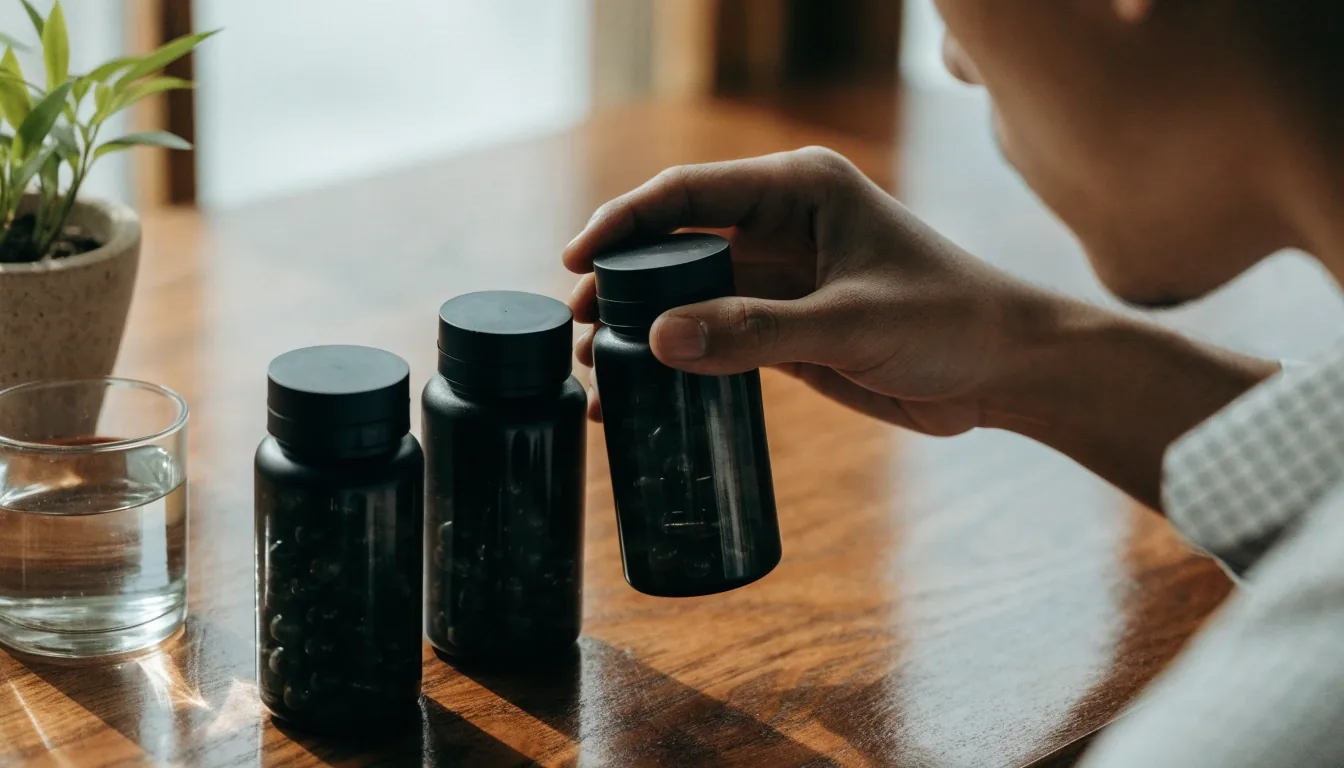
Several unbranded supplement bottles arranged on a wooden table beside a glass of water and a small green plant in natural window light

Who each format suits

The once-daily multi suits a one-step routine. Botanical capsules suit someone who wants a plant-extract formula and already takes something with breakfast. Softgels suit buyers who prefer a single-unit serving and are comfortable with the storage requirements. Whole-food multis suit buyers who want plant-based sourcing and do not mind a multi-capsule serving. Matching format to habit is the practical decision; everything else is detail.

Habit

One step, done

Once-daily multi if you want a single item and no second bottle.

Habit

With breakfast

Botanical capsules if you already take something with your morning meal.

Habit

Single unit

Softgel if you want one unit per serving and can store it cool.

Habit

Plant sourcing

Whole-food multi if plant-based sourcing matters and three caps is fine.

Package counts and how long a bottle lasts

Bottle longevity follows from arithmetic, not from the size of the container. Divide the capsule or softgel count by the serving size and you have the number of days. A 240-capsule bottle at three capsules a day gives 80 days. A 60-softgel bottle at one a day gives 60 days. Compare products on cost per day after this calculation rather than on the sticker price, because the two rankings rarely agree.

Bottle lifetime arithmetic for common package counts and serving sizes
Package Serving Lasts
240 capsules 3 capsules a day About 80 days
120 capsules 2 capsules a day 60 days
60 softgels 1 softgel a day 60 days
60 capsules 2 capsules a day 30 days
30 caplets 1 caplet a day 30 days

Cost per day is the number to compare. A cheaper bottle with a bigger serving can cost more per day than a smaller one.

Before you buy

Checking a listing before you buy

Four things to confirm: the ingredient panel with amounts per serving, the serving size in units, the expiration date, and any registration or halal mark shown. A listing that omits the panel or the serving size is hard to evaluate, regardless of how good the photos look. The product's own marketing text is the least reliable part of the page, and it is usually the longest. If the panel and the marketing text disagree, trust the panel.

  1. 1

    Ingredient panel with amounts

    Amounts per serving tell you what is actually in one dose. A panel without numbers is a label without a claim you can check.

  2. 2

    Serving size in units

    One capsule or three changes how long the bottle lasts and how you plan the routine. It is the number most listings bury.

  3. 3

    Expiration date on the listing

    Worth checking for anything shipped across the archipelago, since transit time eats into the shelf life you receive.

  4. 4

    Registration or halal mark shown

    If the listing displays a registration or halal mark, you can verify it. If it does not, that absence is itself information.

Questions buyers ask before ordering

Short answers to the parts of this page that people usually ask us about directly.

Is this page a ranking of the products?

No. We have no access to sales figures and we do not rank by them. Popular here means frequently listed and easy to find in Indonesian retail, which is a different question from quality.

How do I decide between a softgel and a capsule?

The format usually follows the ingredient. Oil-based formulas suit softgels; botanical blends and whole-food multis usually come as capsules or caplets. Look at the panel first, then the format.

Why do whole-food multis need several capsules a day?

Food-derived nutrients are less concentrated by volume than isolated ones, so a daily serving often takes more than one capsule. That is why the bottle counts for this group run to 120 and 240.

Should I compare cost per bottle or cost per day?

Cost per day. Divide the count by the serving size to get days, then divide the price by days. The two rankings rarely agree, and the per-day figure is the one that matters over a routine.

Where can I read more about choosing a formula?

Our Men's Vitamin Formulas page covers the panel-by-panel way to read a label, and the Healthy Lifestyle Guide covers how a supplement fits into an everyday routine.

Hands placing a small unbranded bottle on a kitchen shelf beside fruit and a glass of water in warm golden-hour light

Where to go next

If you are still weighing formats, the formula pages explain how to read a panel and what to compare between two similar bottles. Questions about a specific product you have seen locally are welcome by phone or email during our working hours, Monday to Friday, 09:00–18:00.

Phone

+62 274 521 706

Visit

Jl. Malioboro No. 60, Sosromenduran, Yogyakarta, 55271

IndoVital publishes informational content about natural supplements and vitamins for men's health. Nothing on this page is a diagnosis or a promise of any specific result, and none of the formats described here are alternatives to advice from a qualified professional. Sections of this page were prepared with the page last reviewed in October 2026.